

Reviewed by Ashish Shah, Managing Director2 November 20268 min readSource: EPCG scheme guide · Handbook of Procedures 2023, Chapter 5 (PDF)
The EPCG scheme — Export Promotion Capital Goods, Chapter 5 of the Foreign Trade Policy 2023 — lets a Gujarat exporter import machinery at zero basic customs duty, and for physical exports without IGST or compensation cess either. In return the unit takes on an export obligation of six times the duties, taxes and cess saved, within six years of the authorisation: at least 50% in block 1 (years 1 to 4), the balance in block 2 (years 5 and 6). That obligation sits on top of the average export obligation — the average of the preceding three licensing years’ exports of the same and similar products, maintained every year. On ₹10 crore of machinery at illustrative rates the duty saved is about ₹2.77 crore, so the export obligation is ₹16.64 crore, with ₹8.32 crore due by the end of year four. Miss it and the duties saved are paid back in proportion, with interest. The DGFT regional authorities in Ahmedabad, Rajkot, Surat and Vadodara issue the authorisation; the EODC redeems it.
What the EPCG scheme gives: zero-duty capital goods for export production
Under Chapter 5 of the Foreign Trade Policy 2023, administered by the Directorate General of Foreign Trade through its regional authorities, an exporter imports capital goods for pre-production, production and post-production at zero customs duty. Capital goods imported for physical exports are also exempt from IGST and compensation cess (paragraph 5.01 of the Policy). The authorisation — commonly called an EPCG licence — covers capital goods including spares, moulds, dies, jigs, fixtures, tools, refractories, catalysts for the initial and one subsequent charge, and computer systems and software that form part of them, except the negative list in Appendix 5F. Manufacturer exporters, with or without supporting manufacturers, merchant exporters tied to supporting manufacturers, and service providers can apply. Machinery bought from an Indian manufacturer qualifies too, against an invalidation letter or advance release order, with a 25% lower obligation. Two conditions frame everything else: imports must be completed within 24 months of the date of issue, and the machinery cannot be sold or transferred until the export obligation is met — the actual-user condition. Our EPCG scheme service page carries the chapter PDFs, the reduced-obligation table and a calculator.
The EPCG export obligation: 6× the duty saved, two blocks, and the average
The specific export obligation is six times the duties, taxes and cess saved on the capital goods — the whole amount, IGST included, not just the basic duty — to be fulfilled within six years of the authorisation. It is split into two blocks and sits above the average export obligation.
Swipe sideways to see every column
| Element | What it requires | When | What counts |
|---|---|---|---|
| Specific export obligation | 6× duty savedBCD + surcharge + IGST + cess | Within 6 years of the authorisation | Exports of goods or services the capital goods can make, direct or through third parties; physical exports in freely convertible currency; deemed exports |
| Block 1 | At least 50% | Years 1 to 4 | As above |
| Block 2 | The balance | Years 5 and 6 | As above |
| Average export obligation | Average of the preceding 3 licensing yearssame and similar products | Maintained every year of the obligation period | Only exports above this average count toward the specific obligation; some sectors are exempt |
| Exports under other schemes | Count too | — | Advance Authorisation, DFIA, duty drawback, RoSCTL and RoDTEP exports count toward the obligation |
The obligation is reduced in three cases, and the reductions do not stack: capital goods bought from Indian manufacturers (25% less, so 4.5×), exporters of green technology products (75%, so 4.5×), and units in the North East, Jammu and Kashmir or Ladakh (25%, so 1.5×) — paragraphs 5.04, 5.10 and 5.11 of the Policy. Which sectors are exempt from the average export obligation is notified by DGFT from time to time; we confirm yours before you apply.
A Surat textile processor: ₹10 crore of machinery, ₹16.64 crore of exports
The unit saves ₹2.77 crore of duty and must export ₹16.64 crore above its usual exports within six years — ₹8.32 crore of it by the end of year four.
- The unit: a fabric processing unit in Sachin (Surat district) that exports processed fabric.
- What it imports: ₹10 crore of dyeing and finishing machinery under an EPCG authorisation.
- Illustrative rates: 7.5% basic customs duty, a 10% surcharge on it and 18% IGST on the value including both — 27.7% in all. On a real authorisation the regional authority fixes the duty saved from the actual tariff rates and values.
The export obligation is six times the duty saved, and at least half of it is due by the end of year four.
| Item | Amount |
|---|---|
| Duty saved on ₹10 crore of machinery (27.7%) | ₹2.77 crore₹2,77,35,000 |
| Export obligation, 6 × duty saved | ₹16.64 crore |
| Due by the end of year 4, at least half | ₹8.32 crore |
| Due in years 5 and 6, the balance | ₹8.32 crore |
All of it comes on top of the unit’s average exports of the last three years, which must also be kept up every year.
| Extra exports a year | Result |
|---|---|
| ₹4 crore₹16 crore by the end of year 4 | Met in about 4 years 2 months |
| ₹2 crore₹8 crore by the end of year 4, short of ₹8.32 crore | ₹4.64 crore unmet at year 6 (28%): about ₹77 lakh of duty repaid, with interest |
Machinery bought from an Indian manufacturer carries a 25% lower obligation, 4.5 times the duty saved: a ₹6 crore kiln for a Morbi tile maker saves ₹1.66 crore of notional duty and carries a ₹7.49 crore obligation. Test your own machinery list on the combined subsidy calculator, which shows EPCG and MOOWR side by side. Source: Foreign Trade Policy 2023 and Handbook of Procedures, Chapter 5 · illustrative rates.
What happens when the EPCG export obligation is not met
- Extensions first. The obligation period can be extended twice, by a year each, on a composition fee of 2% of the duty saved in proportion to the unfulfilled obligation.
- Then the shortfall is paid. If the obligation is still unmet, the holder pays the duties, taxes and cess saved in proportion to the shortfall, with interest. On the Sachin unit’s ₹2-crore-a-year path, about 28% of ₹2,77,35,000 — roughly ₹77 lakh — plus interest.
- Block 1 is its own test. Half the obligation is due by the end of year four, not year six; a unit that treats the sixth year as the only deadline finds the problem late.
- Only new exports count. Exports at or below the three-year average do not reduce the specific obligation, and the average itself must be kept up every year.
- The machine stays put. The actual-user condition applies until redemption; moving or selling the machinery before the EODC breaks it.
- Unredeemed authorisations linger. They keep the bond alive and block new ones.
EPCG or MOOWR? EPCG waives the duty but binds you to exports; the MOOWR scheme only defers it — without interest or time limit — but asks for no exports at all and covers imported inputs too. If the order book clears six times the duty comfortably above your three-year average, EPCG usually wins; if exports are uncertain or most output is sold in India, MOOWR is safer. A capital good takes one route, never both. Our MOOWR-versus-EPCG decision guide works through the four questions with three Gujarat units.
From application to EODC: the six steps
Gujarat exporters file with the DGFT regional authority for their district — Surat for the Sachin unit. The steps below follow Chapter 5 of the Handbook of Procedures.
Get the basics in place
An IEC linked to your DGFT profile, a registered digital signature, GST details for the branches that will use the authorisation, and a valid RCMC from your export promotion council.
Before applyingApply online on the DGFT portal
File the EPCG application (ANF-5A) with the capital goods, their tariff classification, the duty saved, the sector and any reduced-obligation claim, and pay the fee. The nexus between the machinery and the export product is what the application has to establish.
ANF-5AAuthorisation issued
The regional authority issues the authorisation with the duty saved and the export obligation fixed on it; the details go to Customs electronically.
Import within 24 monthsRegister at the port and execute the bond
Register the authorisation with Customs and execute a bond — with a bank guarantee or a letter of undertaking, depending on your export track record — then import duty-free through Hazira, Mundra or the port that serves you.
Bond or LUTFile the installation certificate
Confirm that the machinery is installed at the declared premises within six months of completing imports; a one-time 12-month extension is available on a ₹5,000 composition fee.
Within 6 monthsExport block by block, then redeem
Track exports against block 1 and block 2 and keep total exports above the three-year average every year. Two or more authorisations of the same holder can be clubbed for redemption. Apply with shipping bills and realisation proof; the regional authority ordinarily issues the Export Obligation Discharge Certificate within 30 days of complete documents.
EODC
Whichever route the machinery takes, the State package is unaffected: capital, interest and power tariff subsidy under the Viksit Gujarat Industrial Policy 2026, electricity duty exemption and EPF reimbursement are claimed as usual, and the imported machinery counts toward eligible fixed capital investment.
EPCG scheme: frequently asked questions
What is the EPCG scheme and what does it give?
Export Promotion Capital Goods is a DGFT scheme under Chapter 5 of the Foreign Trade Policy 2023. It allows import of capital goods for pre-production, production and post-production at zero customs duty; capital goods for physical exports are also exempt from IGST and compensation cess. In return the authorisation holder must export six times the duties, taxes and cess saved within six years, over and above its average exports.
What is the EPCG export obligation, and how are the two blocks split?
Six times the duties, taxes and cess saved on the capital goods, fulfilled within six years of the authorisation. At least 50% must be exported in block 1, years one to four, and the balance in block 2, years five and six. On ₹10 crore of machinery with ₹2.77 crore of duty saved, that is ₹16.64 crore in all and ₹8.32 crore by the end of year four.
What is the average export obligation under EPCG?
The specific obligation must be achieved over and above the average exports of the three preceding licensing years for the same and similar products, and that average must be maintained through the obligation period. Only exports above it count toward the six-times obligation. Some sectors are exempt from the average, as notified by DGFT from time to time; confirm your sector with the regional authority before applying.
Is IGST exempt under the EPCG scheme in 2026?
Yes, for capital goods imported under an EPCG authorisation for physical exports: paragraph 5.01 of the Foreign Trade Policy 2023 exempts them from IGST and compensation cess as well as customs duty. The export obligation is then six times the whole amount saved, IGST included — at 7.5% basic duty and 18% IGST, about 27.7% of the machinery value, so ₹10 crore saves about ₹2.77 crore.
What happens if the EPCG export obligation is not met?
The period can be extended twice, by a year each, on a composition fee of 2% of the duty saved in proportion to the unfulfilled obligation. If the shortfall remains, the holder pays the duties, taxes and cess saved in proportion to it, with interest. Half the obligation is due by the end of year four, so a block-1 shortfall surfaces well before the six years run out.
What is the full form of EODC?
Export Obligation Discharge Certificate. The DGFT regional authority issues it when the exporter shows, with shipping bills and proof that the export proceeds were realised, that the export obligation on an EPCG authorisation has been met — ordinarily within 30 days of complete documents. The EODC redeems the authorisation; Customs then cancels the bond executed for the duty-free import.
Is an EPCG licence the same as an EPCG authorisation, and who issues it?
Yes. EPCG licence, also spelt license, is the common name for the EPCG authorisation that the Directorate General of Foreign Trade issues under Chapter 5 of the Foreign Trade Policy 2023; both terms mean the same document. Gujarat exporters apply online on the DGFT portal (form ANF-5A) and are handled by the DGFT regional authority for their district.
Can machinery bought in India be taken under EPCG?
Yes. Capital goods can be sourced from Indian manufacturers against an invalidation letter or advance release order. The specific export obligation is then 25% lower — 4.5 times the duty saved instead of 6 — and the supplier gets deemed-export benefits. The reduction does not stack with the green-technology or North East, Jammu and Kashmir and Ladakh reductions; the single most favourable one applies.
Buying machinery for export production?
Send us the machinery list with values and HS codes and your last three years’ export figures. We fix the duty saved, stress-test the 6× obligation and the average against your order book, compare it with MOOWR, and then file the ANF-5A, the port registration and the bond — and track every block until the EODC is in hand.
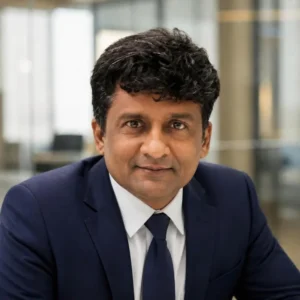
Written by the NeoApex Saver advisory team · Reviewed by Ashish Shah, Founder and Managing DirectorNeoApex Saver Pvt Ltd (formerly Apex Consultants) has filed Gujarat industrial incentive claims for over twenty years — 300+ projects, 99% filing success. Legal references in this article are to the Foreign Trade Policy 2023 and the Handbook of Procedures 2023, Chapter 5; duty rates in the example are illustrative, and the worked example and the reading of grey areas are ours.Last reviewed 2 November 2026 · About the team · Report a correction